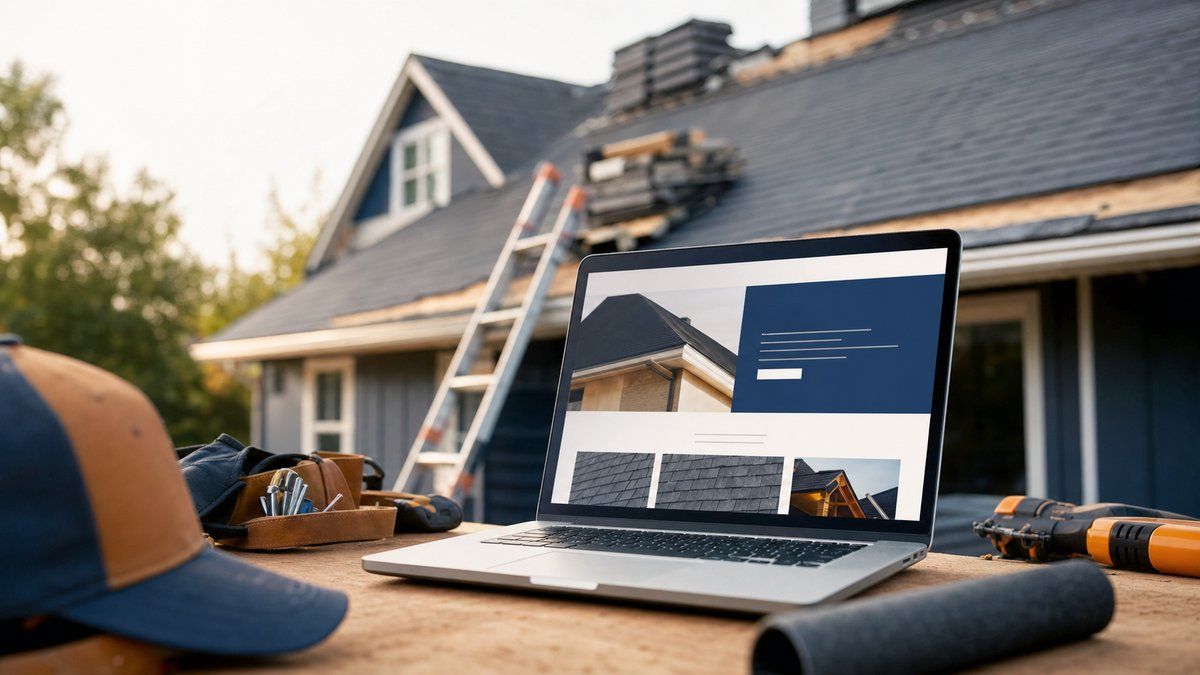
A pretty website that doesn't generate calls is an expensive brochure. A high-converting one has a single job: turn a visitor into a phone call or a form fill. Here's what separates the two.
The job of the homepage: one clear next step
Within three seconds a homeowner should know what you do, where you do it, and how to contact you. That means your phone number and a clear call-to-action are visible the instant the page loads — not buried in the footer. Every section should nudge toward the same action: get in touch.
Speed, because slow sites lose leads
If your site takes eight seconds to load, most visitors are gone before they see it. Homeowners often search on their phone in the driveway right after spotting a leak — a fast, lightweight site wins those moments. Compress images, skip heavy page-builder bloat, and test on mobile data, not office wifi.
Trust signals up top
Homeowners are letting a stranger onto their roof. Reduce the fear fast: star rating and review count, photos of real completed jobs, your service area, licenses and insurance, and any manufacturer certifications. Real photos of your crew and trucks beat stock images every time.
Click-to-call and forms that hit your phone
On mobile, your number should be tap-to-dial. Your contact form should be short — name, phone, and what they need — and the second it's submitted it should ping your phone, not sit in an inbox you check twice a day. Speed to first response is the whole game. Pair it with a missed-call text-back so nothing slips.
A page for each service and town
Dedicated pages for roof replacement, repair, metal roofing, and storm damage — plus a page per town you serve — help you rank locally and let you speak directly to what that visitor searched for. Relevance converts better than a single catch-all page.
Built mobile-first
The majority of roofing searches happen on a phone. If the experience is designed for desktop and merely "works" on mobile, you're losing the majority of your traffic. Big tap targets, readable text, and a sticky call button do the heavy lifting.
Bottom line: looks get you noticed; structure gets you called. If your current site is slow, hides your number, or doesn't route leads to your phone instantly, it's leaking money — no matter how good it looks. See what a done-for-you build includes →
Frequently asked questions
How much should a roofing website cost?
It ranges widely, from cheap DIY builders to custom agency sites. What matters more than price is whether it's fast, mobile-first, and built to convert visitors into calls — a cheap site that doesn't convert is the most expensive option.
Can I just use a DIY website builder?
You can, but most templates aren't optimized for speed, local SEO, or lead routing. If you go DIY, prioritize load speed, click-to-call, instant lead alerts, and dedicated service/location pages.
How many pages does a roofing website need?
At minimum a homepage, an about/trust page, a contact page, and a page for each core service and each town you serve. Those service and location pages are what let you rank and convert for specific searches.